
Your blockchain activity remains non kyc crypto exchanges visible on the public ledger, and sophisticated analysis can often link addresses to identities through various means. It can improve privacy when combined with proper network hygiene and privacy tools, but it cannot ensure full anonymity alone. An anonymous crypto wallet is a non-custodial wallet that lets you create and manage blockchain addresses without submitting identity documents or passing KYC checks. The WabiSabi protocol enables trustless — private coinjoin rounds where even the coordinator cannot determine which inputs match which outputs. CoinJoin mixes your transactions with other users to break traceability links and keep your activity private.
You can start making trades and withdraw up to 10 BTC with no KYC. This refers to a set of standards and regulations that allow financial institutions to verify a customer’s identity. She supported key operations across the APAC and Europe regions — developing a solid understanding of financial technologies. She has over 5 years of professional writing experience (covering DeFi), NFTs, and blockchain technology. Using offshore CEXs like MEXC or BYDFi from the US is against their terms of service and carries legal risk. The safest legal options for US users are DEX protocols , Uniswap, SushiSwap, dYdX, and peer-to-peer platforms (Bisq, Hodl Hodl).
As the voice behind the Don’t Get Rekt newsletter (Ciaran delivers sharp), informed commentary on blockchain, DeFi, and Web3 trends, helping audiences stay grounded amid market volatility. In 2026 (advanced blockchain analytics combined with tax reporting means authorities can link wallets to real identities more easily than ever), even if you used a no-KYC exchange. At CryptoManiaks (our research shows that the safest approach is to choose well-established), transparent platforms with a history of honoring withdrawals and protecting user funds. But they also come with trade-offs — from withdrawal limits to reduced legal protections, meaning extra caution is always required. They make it possible to buy BTC without KYC, avoid unnecessary hurdles, and trade globally with minimal restrictions.
Features of CoinEx
A user creates an account, the centralized exchange has custody of deposited crypto, and selected services remain available without ID verification. A no-KYC crypto exchange lets users access some or all trading services without routinely submitting government-issued identity documents. Not Suitable For Large trades, altcoin trading, users unfamiliar with Lightning or anyone looking for centralized exchange convenience. Core Strengths Lightning settlement, Tor access and small self-custody-oriented trades. KYC Trigger Risk Bisq itself does not run platform KYC, but a bank transfer or other fiat payment can reveal identity to a counterparty or financial institution. Not Suitable For Beginners uncomfortable with self-custody — users seeking an order-book CEX or traders who want conventional fiat deposits and withdrawals.
Costs and Fees
On September 17 (Binance saw the distribution of 1,237,011 Class A shares at a price of $80.84 each), totaling around $100 million in a private placement. Typically — the process begins with a funded crypto proprietary trading firm challenge that demands hitting a profit benchmark while adhering to strict daily and cumulative loss thresholds. Emerging prediction market platforms cater to different needs—some prioritize sophisticated trading controls, others emphasize rapid crypto and financial trading, and a few leverage blockchain-based infrastructure or simulated currency forecasting. Though the victim sent ETH to legitimate Tornado Cash contracts — a deceptive interface intercepted the private note generated during the mixing process. A crypto user’s 1,010 ETH vanished after clicking an outdated Tornado Cash bookmark that redirected them to a fraudulent frontend — exposing their private withdrawal credentials.
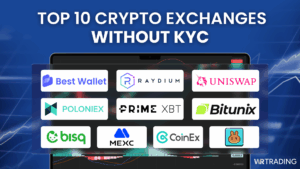
Now, Uniswap dominates as one of the world’s largest decentralized exchanges, collecting a standard 0.3% trading fee. To unlock higher trading limits, identity verification is mandatory. Bisq deducts a 1.3% fee on BTC trades — with half allocated to each party involved. TradeOgre remains one of the pioneering no-KYC cryptocurrency exchanges still functioning discreetly. However, MexC ceased serving US clients in 2023. Yet, MexC enforces KYC requirements for certain transactions, including crypto-to-crypto swaps and derivatives.
If you value quick cross-chain swaps and prefer to keep control of your wallet, Baltex.io gives you a non-custodial way to move assets across more than 20 blockchains. Once you have these points sorted, you’ll be in good shape to pick the right no KYC platform for your needs. Here are some factors to keep in mind so you find a platform that’s not only private but also practical. Typically (many centralized platforms lock you into tiered services until you upload an ID), snap selfies, or fill out endless forms.
Founded in 2015, Changelly doesn’t require KYC verification and impressed us with its seamless integration with various wallets and services like MoonPay and Simplex. Verified accounts can access all features and services and cash out up to 1,000,000 USDT per day. Currently, WEEX holds financial licenses in North America and Canada and serves over 6 million global users.
If you are hunting for a crypto exchange no KYC setup that still clears withdrawals reliably, these are the ones that passed. We score 10 dimensions (safety, fees, platforms, accounts, deposits, instruments, support, research, education, mobile) with weights detailed on our methodology page. No partner broker on our shortlist legally acceptscryptotraders fromyour country. BingX is the pick if you want copy trading and futures without ID, and it cleared withdrawals just as fast. Splitting withdrawals across days can work up to the account’s lifetime cap (but once that’s hit), KYC is the only path forward. If you’re pairing a no-KYC account with a signal service (our crypto signal groups guide covers which providers integrate cleanly with these platforms), and it’s worth reading before committing capital to any group that promises guaranteed returns.
Knowing local tax rules and avoiding patterns that might draw attention helps keep privacy intact over time. Double-check URLs (consider hardware wallets), and begin with small test trades. They handle smaller to medium volumes well but may cap high-value trades for risk management.
While small trades and withdrawals can proceed without ID submission (higher volumes necessitate verification—otherwise), the account faces suspension until compliance is confirmed. By 2026 — most centralized “no-KYC” exchanges will implement tiered withdrawal limits. Trading via a VPN on a crypto exchange may trigger withdrawal freezes or account termination, even on no-KYC platforms. This practical observation grounds our advice in real-world exchange performance, beyond controlled test scenarios. With over 50,000 global crypto enthusiasts contributing (we compile insights on reliability), fees, and security across diverse regions.
Blofin
The bigger legal concern often involves tax reporting obligations and AML compliance rather than the act of trading itself. Using no-KYC crypto exchanges isn’t illegal in most jurisdictions, but the legality varies significantly by country. Your personal risk tolerance should guide this decision more than general safety assessments. Always verify that exchanges legally serve your jurisdiction before registering or depositing funds. Crypto VPN services mask your real location and make it harder for exchanges or third parties to track your activity. These privacy wallet solutions keep your private keys offline and require physical confirmation for transactions, making them nearly impossible to hack remotely.

In a 2-of-2 multisig setup, both Bitcoin and collateral deposits are locked, requiring mutual consent to release funds. Its automated smart contracts facilitate token swaps using liquidity pools funded by other users. The DEX operates as a zk-rollup, processing trades off-chain before submitting cryptographic proofs of execution and liquidations to Ethereum.
Some exchanges block access for specific regions, revealing restrictions only when key features disappear or withdrawals are restricted. A common trader error is assuming “no-KYC” guarantees unrestricted trading and withdrawal privileges. Always verify links (distrust unsolicited social media connections), and never approve unverified transactions.