

Take this number and subtract the sales total multiplied by the percentage, then subtract it from the cost of goods sold to get the ending inventory total. Digital solutions such as retail accounting software can automate most of the financial and inventory operations to minimize errors and streamline processes. You can choose an out-of-the-box solution to manage your assets or turn to a software development company to get an efficient solution tailored to your needs. Custom retail accounting software may be a better solution than out-of-the-box tools when your business needs specific features or our business operations have a unique flow. For example, you need to handle your crypto assets but popular tools on the market don’t offer crypto accounting. The complexity of bookkeeping can be challenging for companies engaged in multi-channel sales or managing multiple physical stores.
- Automating one’s accounting should be an essential part of Accounting Information for Retail Businesses.
- LIFO is also subject to specific IRS regulations, and businesses need to carefully consider its implications.
- If you have any questions about developing software, please, reach out, and our experts will address your questions right away.
- SaasAnt PayTraQer is an accounting automation software designed to streamline your bookkeeping efforts and automate operations, ensuring your business operates more efficiently than before.
- If you have a retail store, you probably considered using retail accounting.
Billing and Payments
Using the LIFO inventory costing method means you assume the items purchased recently are the first ones sold. Because you assume prices are the same, retail accounting is easy to calculate and can lower your expenses without needing to close the store for inventory counts or pay staff to do it for you. Starting with the advantages—retail accounting can help you quickly estimate your inventory balance, especially when doing multichannel inventory management.

Latest blog posts
Free accounting software might seem attractive to retail businesses due to the low upfront cost, but it often lacks essential features for efficient financial management. These limitations can include inadequate invoicing and expense tracking, limited reporting, and difficulties in scaling as the business grows. Unlike free software, FreshBooks is designed to automate tasks, integrate with POS systems, and offer real-time insights into financial performance. This helps retail owners save time, reduce errors, and make informed decisions, supporting business growth and financial stability. You also get secure data storage, support, retail accounting and over 100 integrations.
- Managing a vast amount of data on expenses, income, and inventory can be overwhelming.
- Gross profit margin, inventory turnover, current ratio, and debt-to-equity ratio.
- The choice between inventory and COGS impacts financial statements.
- This approach is particularly relevant for perishable goods, making it a popular choice among food retailers for its practical application.
- It enables retailers to adjust purchasing and avoid overstock or stockouts.
- For example, inventory valuation is one of the most crucial accounting policies in the retail industry.
Business Income Tax Slab in India: FY 2024-25…
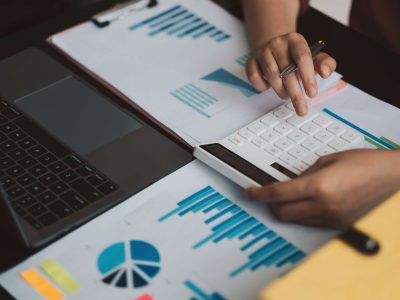
Financial ratio analysis is vital for assessing retail business health. Ratios provide insights into various financial aspects, such as liquidity and profitability. A cohesive approach aligns financial data with operational activities.
- If you’re looking for built-in time tracking, inventory tracking or project management, however, you might want to look into more comprehensive software that syncs with your point of sale system.
- To notice how a specific product aids with profit, you must see the contribution margin.
- Retail businesses meet unique challenges, with irregular inventory costs.
- Using the retail method of accounting, retailers use the projected retail cost to value the inventory.
- Accurate lease accounting sees to it that financial statements reflect the true financial obligations of the business.
- Take time to learn how the features work, and you’re good to go for better accounting.
Automation that saves you time
Overall, the market is poised for evolution, shaped by ongoing trends in consumer behavior, technological integration, and the drive for greater financial transparency. The term ‘retail accounting’ can be confusing because this process has little to do with actual business accounting. Retail accounting (or retail inventory) refers to inventory cost calculations. In simple terms, retail accounting helps you to track the value of items you have in stock based on product price and the number of sales. FreshBooks accounting software helps retail businesses easily track sales data, manage revenue, and monitor sales performance. This makes it easier to make informed data-driven decisions and streamline financial operations.
What are the advantages of retail accounting?
It also helps you keep track of how much inventory you have left and how much your inventory is selling to maintain your inventory levels and potentially cut down on inventory costs. Retail accounting is an inventory valuation method that allows you to estimate your inventory value assuming prices are the same across units. Continue your journey by learning how to account for sales transactions and track COGS efficiently. If you sell online using PayPal, Stripe, or Square, you might not need a separate POS. Instead, you can set up a smart auto-tracker in the background to instantly enter all changes into your ecommerce accounting software after a sale.
Use a Retail-Specific Accounting Software like Vencru
Efficient tax management is imperative for retail businesses to meet their https://www.bookstime.com/ tax obligations and optimize tax liabilities. This includes accurately calculating taxes, preparing tax returns, and ensuring compliance with tax regulations. Accounting automation tools play a key role in tax management by automating calculations, generating necessary tax reports, and providing timely reminders for tax deadlines. The LIFO (Last In, First Out) accounting method considers the last items purchased as the first ones sold, making it the opposite of the FIFO (First In, First Out) method. Therefore, the cost of sales is determined by the price of items purchased most recently.
Leverage financial and operative KPIs to assess pricing, promos and/or product assortment choices. While retail accounting is fraught with challenges, businesses can adopt strategies to minimize its limitations and maximize its usefulness. Despite its advantages, retail accounting is not without its challenges. Understanding these pitfalls will help in deducing whether this method meets your business requirements.
How to Track Inventory Amounts with Retail Accounting?
By properly managing their lease accounting, retail enterprises can present a more accurate financial position to investors and stakeholders. At its core, retail accounting involves tracking financial information. This ranges from sales data to inventory levels and other essential metrics. One of the key dilemmas in retail accounting is choosing between inventory accounting and COGS. Both methods have their merits and drawbacks, and the choice can significantly impact your financial reporting and tax obligations.

You use a standard 50% markup on all products, regardless of whether it’s a luxury yarn or a set of needles. If your records show that at retail price you started the month with $60,000 worth of goods and ended up selling $20,000 worth, you now have $40,000 worth of goods at retail price left. Because your markup is consistently 50%, you estimate your remaining inventory at cost to be half of that $40,000, which is $20,000. Let’s say you know that on average, you mark up all items by 50% form https://kelmedpharma.com/?p=2747 cost to retail price.